Light Within The Shadows
Shops
Showing 61–72 of 118 results

Showing 61–72 of 118 results
Pnina Granirer has exhibited widely during the 52 years of her life in Vancouver. Her works are found in numerous private and public national and international collections, such as the Glenbow Museum (Calgary, Alberta), the Yad Vashem Museum (Jerusalem, Israel), the Art Gallery of Greater Victoria, BC, the Two Rivers Gallery (Prince George, BC), the Richmond Art Gallery, the Art Gallery of Hamilton (Ontario), Museo Eugenio Granell (Spain), the Museo Nacional de Bellas Artes (Chile) and more.
In 2014 Pnina was included in the extensive encyclopedia of international surrealism by Arturo Schwarz, Il Surrealismo: Ierie Oggi (Italy), and in Jose Miguel Pérez Corrales’s anthology, Surrealismo: El Oro del Tiempo (Spain), in a 5-page chapter.
Linda Dayan Frimer is an internationally recognized artist whose work addresses questions of culture, memory, trauma and reverence for the natural environment. She is a celebrated facilitator and painter who produces cultural, commemora- tive, educational and esthetically powerful contributions, and whose artworks have been described as “impactful,” “stun- ning,” “emotionally moving,” “enthralling” and “meaningful.”
Born in the wilderness town of Wells, British Columbia, from a young age Frimer was immersed in in the wonder of the forest, rivers and mountains. It was in these formative years, surrounded by the awe-inspiring natural landscape, that Frimer developed her creative vision. It was also during these early years when she first learned of war and cultural suffering. Becoming determined to champion and protect the sanctity of all life forms, Frimer turned to the creation of art as her natural medium.
Frimer’s artworks have repeatedly been called upon to represent—through fundraising, awareness and education—the work of environmental organizations, such as the Trans Canada Trail, the Raincoast Conservation Foundation and the Western Canada Wilderness Committee, who promote Canada’s vast cultural and geographic diversity, wilderness preservation and the interdependency of nature and wildlife, and spread knowledge about endangered species. Paul George, former Director of the Western Canada Wilderness Committee, has offered that perhaps equally important to the fundraising, Frimer’s work “touched upon the emotional and spiritual cords, where real change occurs.”
Alongside Frimer’s artworks championing the environment, significant collections and donations of her works have support- ed Margaret Laurence House, Canadian Red Cross, Canadian Cancer Society, Vancouver General Hospital, Richmond General Hospital, Children’s Hospital Foundation, Wells Community Hall and the Vancouver Art Gallery, among others. She is the recipient of many awards, including an Honorary Doctor of Letters from the University of the Fraser Valley. Her murals illuminate hospital walls, synagogue sanctuaries and university corridors, where it has been said they “offer healing colours that contain emotional, life enforcing light, a calming rhythmic movement and imaginative forms that are visionary.”
Frimer has facilitated cultural healing workshops between various cultural groups. She is co-founder and facilitator of the Gesher Holocaust Project, in which she developed techniques and worked with multi- generations of Holocaust survivors and their children to release trauma through art. This project resulted in the creation of powerful commemorative works of art that were exhibited throughout major cities in North America under the auspices of the Montreal Holocaust Centre.
Frimer is co-author of In Honour of Our Grandmothers: Imprints of Cultural Survival, a collaboration between two Jewish and two First Nations artists and poets that brought together research and creative exploration as a means to process trauma associated with cultural oppression and at- tempted genocide. In her book A Wilderness Journey, Frimer explores the inextricable link between her own ancestral story, her love of the wilderness and cultural resilience.
You can view more of linda’s book here.
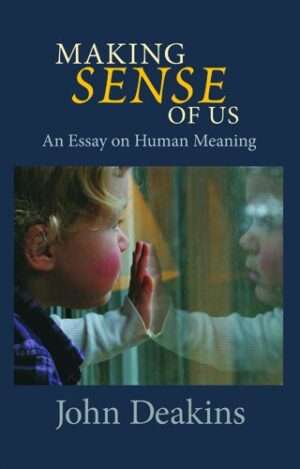
As a social worker, John Deakins has witnessed first hand the terrible things we both knowingly and unknowingly do to one another. He trained at the University of Bristol in England and subsequently obtained his PhD in Social Service Administration at the University of Chicago. After three years of practice in England, and six in the US, he and his family moved to Canada, where for 22 years, until ‘retiring’ in 1991, he taught at the University of British Columbia. He lives in Vancouver, BC.
Bruno Huber was born and raised in Zurich, Switzerland. He immigrated and settled in Canada, first in Nelson, BC and then in 1990 he moved to Granthams Landing, Gibsons, on the Sunshine Coast near Vancouver, BC.
He is the winner of the Hohnharter Prize for Literature with a subsequent book of short stories published by Ullstein GmbH.
He was the owner of Coast Books in Gibsons from 1990 to 1995, and was also the owner of a French Restaurant in Vancouver’s Westend from 2010 to 2012.
He has been a film technician for 25 years.
You can read his blog at: brunospointofview.com
Jim Kerr was born in 1945 and was brought up in Kelowna, BC. He attended the University of British Columbia out of high school and dropped out after his first year to hitchhike through Europe and North Africa with his best friend, Blair Campbell.
Soon after, Jim returned to earn an arts degree in economics at UBC, after discovering his knack for quick calculations at currency-exchange booths over the course of his journey. He has lived in Vancouver, BC, ever since and enjoys golfing and travel during his retirement after a successful career as a partner in a national chartered accounting firm.
After many years boring his close friends and family with countless stories of his epic voyage, he committed to writing Meet Me in Cairo at their behest. Jim is married to his wife, Kelly, and has three daughters and one son. He currently spends a quarter of the year travelling around the world, often arranging adventure bike tours with friends to far-flung places such as Chile and Myanmar.
You can read more about Jim and his latest book here.
It is with a profound respect and admiration that we mark the passing of Jaime Smith. On October 24th, succumbing to sepsis after a hip fracture.
Jaime’s journey took him from the observatory to the psychiatrist’s office, and a legacy of thought-provoking literature. Testaments all to his voracious appetite for knowledge across disciplines.
Jaime’s many life chapters took him from a US university to the observatories of Argentina to the front lines of psychiatric care during the AIDS crisis in Vancouver and then to becoming the only resident psychiatrist in the Yukon before retiring in Victoria. His literary works that we’ve had the pleasure to publish, Meteors and Stardust, bear witness to his extensive knowledge and unique perspective as both an astronomer and a psychiatrist.
Shown in his written works in books and in his blog, Jaime’s life exemplified a relentless pursuit of intellectual growth and social progress.
Jaime’s enduring wisdom is imparted in his books, and his legacy is carried on through his three daughters, his grandchildren, and his great-grandchildren.
JAIME SMITH, MD, FRCPC, was born in Appleton, Wisconsin, and upon completing his undergraduate studies in humanities at the University of Minnesota, moved to Argentina to work as an astronomer at the national observatory, leaving behind the political framework of a country that he no longer supported.
Smith’s path would ultimately lead him to British Columbia, where he was a university teacher in physics, mathematics and astronomy before changing careers and receiving his MD, followed by four years of training in psychiatry at the University of British Columbia.
Smith was a participant in the fight to de-stigmatize homosexuality within the medical community and served on the front line of the AIDS epidemic in Vancouver, BC. A widower since 2011, he has three daughters, seven grandsons and four great-grandchildren.
To read more of Jaime’s writing, visit his website: https://karhunluola.wordpress.com
Luther Schuetze was born to German immigrant parents in Brazil, educated in basic medicine and theology in Germany, and worked for years on farms on the Canadian prairies. He was married with three sons and another on the way when he was called by the United Church to be a minister in Little Grand Rapids. He and his family later moved to Oregon, then to B.C. Luther lived in retirement in Penticton until his death in 1979.
Gianni Kovacevic has spent over a decade honing his passion for investing in the new spending class. A proponent of realistic environmentalism, he is fascinated by how growth in emerging markets impacts the global economy, environment, and our daily lives. He has brought audiences around the world a deeper understanding of this army of new consumers and the science that makes their unstoppable ascent possible.
Sylvia Crooks was born and grew up in Nelson, BC. She is a graduate of the University of British Columbia, with a BA in English and History, and a Master’s degree in Library Science. She worked in public libraries in Vancouver and Burnaby before joining the faculty of the UBC School of Library, Archival and Information Studies, where she taught reference and outreach services for 15 years before retiring in 2002. Her book Homefront & Battlefront: Nelson, BC in World War II was given an honourable mention in 2005 by the BC Historical Federation. She currently resides in Vancouver.
Matthew Kalkman has an LLB from Durham and an MSc. from the London School of Economics. He represented the LSE at the 2009 UN Climate Change Conference in Copenhagen. His writings have been published in the Cambridge Student Law Review and the Inter Alia Law Journal. After Studying French at ULaval, he is presently working in environmental law in Vancouver, B.C.